 Torki
Torki
 AlgoForKids
 Pomki
Pomki
 Solki
Solki
 Lokki
Lokki
For ages 4–10 · iPhone & iPad
Build machines that turn
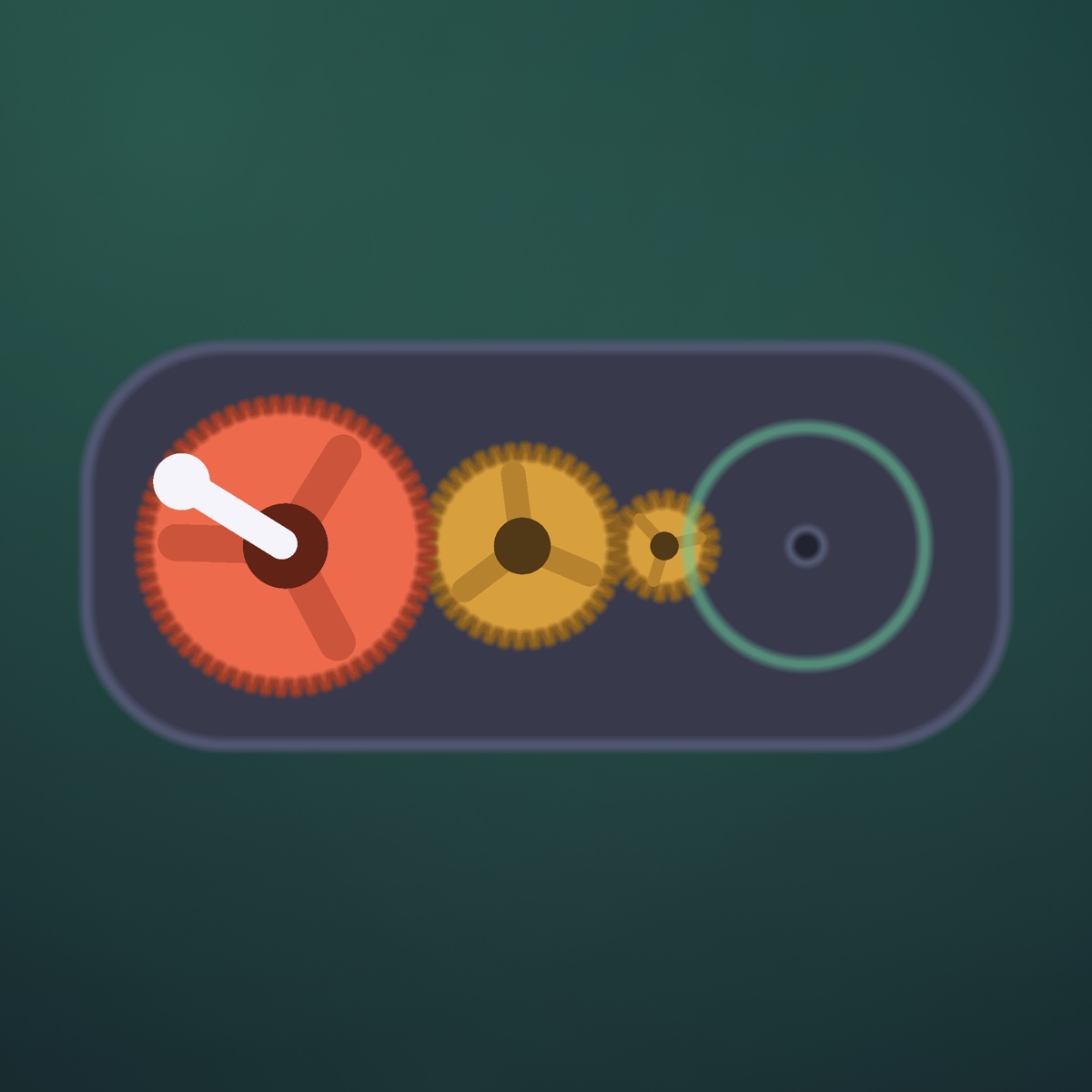
A workbench with empty holes, a crank that never stops, and a machine waiting at the other end. Your child picks a gear and taps a hole; gears that touch turn each other, and the movement travels across the bench.
- 160 hand-made levels
- First 20 free
- No ads, ever
The quiet part matters
A game a four-year-old plays alone should not be a place where anything is being sold, measured or collected.
No advertising
Not banners, not videos, not “rewarded” ads. There is nothing in this game trying to get your child’s attention somewhere else.
No data collection
No analytics, no tracking, no identifiers. We do not know who plays, when, or for how long — by design.
Works offline
The app contains no networking code at all. It plays on a plane, in a car, on a tablet with no SIM.
One purchase, behind a gate
The first 20 levels are free — a complete world on its own. Unlocking the rest is one purchase, behind a parental gate.
Three steps, every level
The loop is always the same, so the child’s attention goes to the machine instead of the interface.
-
1 Pick
Choose a size
Three gears sit in the tray: small, medium, large. One tap picks the size. Nothing is dragged, nothing has to be aimed.
-
2 Tap
Put it on a peg
Touch an empty hole and the gear drops onto it. If it touches a gear that is already turning, it starts turning too — immediately, with the whole chain.
-
3 Watch
The machine answers
The target turns, or it does not. Nothing is scored, nothing is written; the movement itself is the feedback. Tap a gear to lift it off and try another size.
What a child actually learns
Three worlds, one workbench. Each world adds one real idea about machines — and the puzzles make the child use it.
Cause and effect
Touching gears turn each other. The first world is that single sentence, twenty levels long: reach the machine, and the machine moves because you connected it.
Direction
Every contact reverses the turn. Add one gear and the whole machine runs the other way — the child feels the rule before anyone names it.
Parity
From there it follows that an odd number of gears in a ring jams. That is not a rule we invented to be difficult; it is a fact about gears, and children discover it by building one.
Ratio
A small gear driven by a big one spins faster, in an exact proportion. The third world asks for half speed, double speed, three times — fractions, before fractions.
Fewest gears
Finishing earns one star; three stars go to the smallest machine that works. That is optimisation, met without the word, and the minimum is computed rather than guessed.
Every level made by hand
Procedural generation was tried on an earlier game and thrown away: it produced levels that were technically different and practically identical.
All 160 levels were designed by hand, then checked by a solver that proves three things — the level can be solved, no two levels are the same puzzle, and the three-star target really is the fewest gears the machine can be built with. The solver works in whole numbers: two gears touch when the distance between their pegs is exactly the sum of their radii, so there is no “nearly touching” and no tolerance to tune. Difficulty was measured rather than estimated, so the curve rises smoothly instead of jumping.
- 160
- levels, hand-made
- 20
- free to play
- 3
- worlds, one mechanic
- 4
- languages
What is on the workbench
Three gear sizes and two fixed parts. There is nothing to read, no numbers and no symbols anywhere in the game.
The small gear
The fastest of the three and the one that fits where nothing else will. Driven by a large gear, it spins three times for every one turn — the whole third world lives on that difference.
The medium gear
The middle size, and usually the cheapest way across an empty stretch of bench. Most solutions are mostly medium gears.
The large gear
Slow and long-reaching. It crosses a gap two small gears could not, but it drags the pace of everything downstream with it.
The crank
The red gear on the left, already turning when the level opens. It never stops and it cannot be moved — every machine starts here.
The machine
The ring on the right that has to turn. From world two it also shows an arrow — which way — and from world three a pace mark: half, double, three times.
A jammed ring
Close a ring with an odd number of gears and the whole thing locks. Nothing breaks and nothing is lost; the machine simply stops, which is exactly what would happen on a real bench.
Questions parents ask
Does my child need to read?
No. There is no text on the workbench and no numbers either. Direction is shown by an arrow, pace by a mark that moves — everything is shown by the machine itself.
My child is four. Is it too hard?
No. The first world has one rule — make it turn — and one gesture: pick a size, tap a hole. Nothing is timed and nothing can be lost. The free section is exactly that world.
Is this really a maths game?
It is a mechanism game, and by the third world it is a ratio game: to run the machine at half speed your child has to build a proportion out of gears. Fractions arrive as movement, years before they arrive as notation.
How much does it cost?
The app is free and the first 20 levels are free to play. Unlocking the remaining 140 is one single purchase — not a subscription, and there is nothing else to buy.
Can my child buy something by accident?
No. The purchase screen is behind a parental gate that a young child will not pass. Apple’s own payment sheet then asks for Face ID or a password.
Can my child get stuck or lose?
There is no way to lose and no timer. A wrong gear is not a mistake — tap it and it comes off. Even a jammed ring is not a failure; it is the game teaching what an odd ring does.
Is there any advertising?
None. There is no advertising code in the app at all, and there never will be.
Which devices does it run on?
iPhone and iPad running iOS 16.6 or later, in English, Turkish, German and Spanish.
Ready when they are
Twenty levels are free — the whole first world. That is enough to know whether your child likes it.
iPhone and iPad · iOS 16.6 or later · No ads · No data collected